Friday, March 8, 2013

House of Cards...(I Mean Content.)


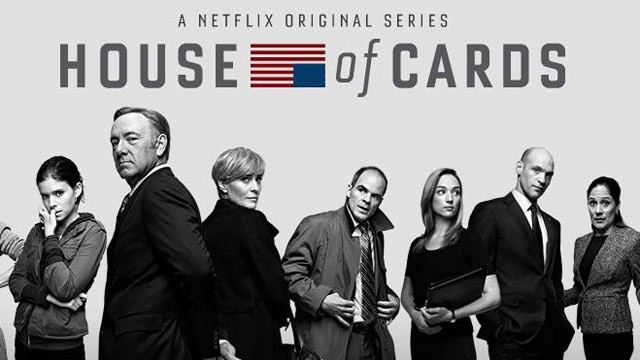
At the center of Netflix's new $100 million original series is, POWER. Each character in the series craves and would do anything for it. However, what is more impressive with this series is the power move that Netflix made that sent shock waves through the industry.

 In grandeur style, with the power of data on their side they crafted a brilliant series that leveraged how their audience was observed to view content. Binge viewing

Its been said that people have short attention spans, but Netflix proved them wrong as audience finished the show in less than 3 days. Unheard of in the traditional and linear TV programming world. However, there are many lessons that marketers can learn from this bold content marketing strategy.


In Brandon Carter's Tech Crunch article, Netflix's Content Marketing Secret Sauce Is Wrapped Up In 'House of Cards' he outlines some things that content marketers should consider when producing content for their brand.

The first thing he talks about is that content marketers need to aim high when producing content. This is necessary because content marketers are no longer just competing with their competition within their space, but with the major content platforms, such as Facebook, Twitter, etc. Overall, content producers cannot afford to cut corners when creating and distributing content to their audience.

The next thing he goes into is how content producers need be adaptive to audience consumption behaviors.  For instance, Netflix knew that their audience binged viewed the content so they took advantage of that. What looked like a big risk from those from the outside looking in was very strategic on the part of the video streaming company. 

So content marketers need to be in tune with their audience consumption behavior.

Overall,  he wraps up the article by highlighting the importance of audience engagement, tracking and optimization. The assumption that the author made was that when you get your audience to be hyper engaged there is more of a chance to convert to loyal customers.

For content marketers, they must be able to build this engagement into their content marketing strategy. It does not stop there though, they also need to continue to track and optimize if the engagement is authentic.

At the end of the day there needs to be a return on investment of time and money that it takes to produce superior content.

How effective is your content marketing strategy?

[Sources:]
Netflix's $100m Digital Marketing Experiment-'House of Cards'
http://mojomedialabs.com/netflixs-100m-digital-marketing-experiment/

Netflix's Content Marketing Secret Sauce Is Wrapped In 'House of Cards'
http://techcrunch.com/2013/03/02/what-netflix-can-teach-us-about-content-marketing/?utm_source=dlvr.it&utm_medium=statusnet

Saturday, February 23, 2013

Once Upon A Time...


It is safe to say that we as human beings are creatures of stories. From cavemen painting stories on cave walls to the 140 character tweet, there is an intoxicating element to a story told well. Telling a compelling story has a powerful way of breaking down the barrier of logic to impress and embed messages into the human psyche.

In the Fast Company article,  Why Storytelling Is The Ultimate Weapon the author challenges brands to spend more time creating content that just does not tell the features and benefits of a product or service, but craft a story around the product or service that compels consumers to lose themselves in the story.

He also points out fictional stories are more effective than writing stories that are based on evidence and argument. Claiming that studies have show that, "...our attitudes, fears, hopes and values are strongly influence by stories.

When I was looking to do a documentary film on a competitive eater it was very important for me to make sure that we were able to develop a story that transcended the "sport". Even if a person did not understand or did not agree with the gluttony fest the story of the subject of the film would be told in a way that would resonate  with the audience.

What I have found that there is more in common with humans than differences and its the story that connects us. The foundational message of the film was to persuade people through an unconventional and in some cases unwarranted means that we are all the same.

We all have the same fears, hopes, joys, concerns, etc. and companies for a long time have failed to show the human side of their businesses. However, they are learning due to the more competitive landscape in the marketplace that they need to look make sure that their company story is embedded into the overarching communication strategy.

What Are Your Thoughts On Your Companies Communication Strategy?

Wednesday, February 20, 2013

Are You 4G?


The article written by Chris Baylis of Tribal DDB Amsterdam was very challenging. As I begin to put together my creative agency one of the traps that I don't want to fall into is doing business as usual. Using 20th century advertising strategies in a 21st century world does not work. 

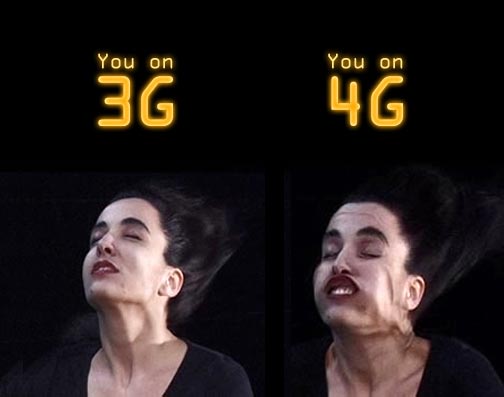
The way Chris Baylis illustrates it is the difference between being on a 2G network and a 4G network. He uses the mobile phone network comparison to  show how most agencies take a more linear approach to helping clients create advertising relying on the  traditional advertising methods. (TV, Print, etc.) 

On a greater note even as technology changes, going "digital" doesn't necessarily mean that you are being innovative. Agencies are just digitizing old methods.

I admit I fell in this trap when I was working on my first documentary film for a client. It was meant to be for promotional uses and to help establish the company brand, but looking back I can see that I approached it from a "2G" or "3G" perspective. I pretty much looked at other company's in the same space and looked for ways to make a better product. 

However, now I realize I was following a marketing method that was leading me down the road of just interrupting the audience and not offering any real value value outside of producing a "cool" film. Making the transition from becoming a "3G" creative agency to a "4G" agency is helping clients create culture with their products and services, because consumers are more connected and more savvy than ever before.

Consumers have become the center of the value chain because they have the same technology as the brands have. The power has shifted to the consumer and that can be a hard pill for a lot of agencies to swallow.

Chris Baylis leaves agencies with the following  tips to help upgrade them to 4G:

  • Remember that you are in the innovation and disruption business, not the interruption business. 
  • Truly understand your value in the marketplace and charge a premium for your services, even in an economic slump.
  • If your client's do not want to listen to you find new ones.

What Are Your Thoughts?


Sunday, February 3, 2013

"Passion Project", Kareem & CrowdFunding


Passion Project 
I am currently shooting a documentary in regards to the world of competitive eating, at first it started off as a “passion” project. I was very fascinated by the sport through a good friend of mind who happen to be an up and coming competitor.

The documentary, like any project had certain costs that I just absorbed because of the nature of the project, but after listening to this podcast I learned something very significant regarding having the capacity to deduct the expenses that I incur from my main salary.

In the Storey v. Commission of Internal Revenue case the court ruled that the filmmaker, Ms. Storey, “had met her burden of proving that she set out to make a profit in her filming of Smile ‘Til It Hurts.” The court also ruled that she was able to deduct her losses from the income that she earned as a lawyer.

This case will have a positive impact on the documentary film industry as a whole, because in most cases documentary films are most done out of the love of a certain topic.

Kareem's Documentary Woes
I grew up watching the Laker star Kareem Abdul-Jabbar. I even saw the documentary film that he produced that was based on his book, “On The Shoulders of Giants:My Journey Through The Harlem Renainssance.”  Though the documentary was good, I had no idea how much Kareem had to go through to get the film produced.

According to reports, he hired a film production company for $1 million to have the film due to be considered in the Sundance Film Festival.

The hired production company ends up not following through on the promises of producing a full-length film and caused Kareem not to show the film on his desired date. If I was Kareem, I would have been upset as well, seek $3 million dollars in damages.

My take away from this case is, if I am  hired to do a documentary film for a client. I should take the time to ensure my client that I am able to handle the size of the project.  Also, an area where the production dropped the ball is not getting all required liscenses to include in the film, which delayed production.

CrowdFund Your Next Film
One thing that I have learned in co-producing my first short documentary film is that it takes money to actually make it great. Sometimes, finding investors who are willing to bet on you and your film could be hard to come by. Investors automatically want to know how they are gonna make their money back.

In comes President Obama’s, “JOBS Act”, (JumpStart Our Business Startup Act). This act is geared to help up and coming start-ups get access to capital through an alternative method, called crow-sourcing.

Sites like, KickStarter or IndieGoGo have already been springing up, but this Act will give real investors an opportunity to gain equity in projects.This is good to know as I begin seeking investment to help finish the film.

Podcast References:

Passion project
http://www.entertainmentlawupdate.com/2012/05/episode-031-terminations-taxes-and-takedowns/

Kareem’s Documentary
http://www.entertainmentlawupdate.com/2010/04/entertainment-law-update-podcast-episode-10-use-the-force-big-boy-and-watch-out-for-beyonces-undies/


Crowdfunding films
http://www.entertainmentlawupdate.com/2012/04/episode-30-jobs-act-crowdfunding-limited-editions-and-more/

Sunday, January 13, 2013

Industry Liabilities


Viacom International, Inc. v. YouTube, Inc.

File Date: March 2007

Case Summary
Bill Clinton signed a copyright law in 1998 with the help of congress that would help move the United States forward into the digital age. Less than a decade later, that act would supply the legal provisions that would be the basis in which YouTube and parent company Google to protect itself against the global media conglomerate, Viacom International.

The name of that act is called The Digital Millenium Copyright Act (DMCA) and had a primary intent to limit the liability of the Internet service provider’s from copyright infringement from users.

In this case, Viacom filed a $1 Billion dollar suit to YouTube for the copyright infringement of its users claiming that the video-sharing site allowed users to access over 160,000 Viacom-owned videos without permission.

Conclusion
As a personal user of YouTube, this case sets a precedent for protection of the producer or the distributor of video content. If I am a producer of content that host my videos on YouTube I am in favor of the protection of the DMCA, just in case I use copyrighted material that I may not have known about. 

I think in most cases users are not trying to violate any copyright infringements, they are just using the videos for entertainment value. However, YouTube, must be mindful on how to protect themselves of this type of infringement.

References:
https://www.eff.org/deeplinks/2012/04/viacom-v-google-decision
http://www.pbs.org/mediashift/2010/07/what-the-viacom-vs-youtube-verdict-means-for-copyright-law183.html


Emeco Industries, Inc. vs. Restoration Hardware, Inc.

File Date: October 2012

Case Summary
Emeco Industries is the home to the 68 year old Navy Chair that has been a staple in its furniture business from the very beginning. Over the decades the chair has been a symbol of that timeless American spirit of quality craftsmanship. 

One chair sells for $495 and goes through a process of 77 steps from beginning to end. Recently, Restoration Hardware, a leading luxury furnishing retailer, "knocked off" the Navy Chair with a version of their aluminum chair that is of lesser quality and sells for only $169. 

According to Emeco's press release, they filed for a preliminary injunction in US District Court, that blocks RH from,"manufacturing, marketing, advertising, and selling" their version of the iconic chair.

Conclusion
One aspect of my business will be creating physical objects that help become a staple in the brand that I am helping to build. This case is a classic example on making sure that I do due diligence in the beginning to file for all trademarks surrounding the product. I personally believe Restoration Hardware was fully aware of their version of the Navy Chair.

 In my opinion they should have went directly to Emeco to get licensing rights to the chair or just do a collaboration of a similar chair at a lower price point.

References:
Emeco's CEO, Greg Buchbinder
http://vimeo.com/52378321
http://dockets.justia.com/docket/california/candce/5:2012cv05072/259495/


Penguin Group, Inc. vs. American Buddha, Inc.

File date: January 2011

Case Summary
According to its website, American Buddha online library, "makes available selected artistic and literary works under a system of voluntary, free online lending, under the fair use exclusion from copyright liability." They make these works available to 50,000 members for free. However, Penguin Group, who is an independent book publisher based in NYC who found four of their books that were uploaded to the site without permission and filed a copyright infringement suit against them.

Conclusion
This case got a little messy, because American Buddha was banking on the copyright implications only on "printed literary works" and thought that its users would be protected the DMCA. This is a lesson in making sure when producing and publishing literary works to make sure that the same legal ramifications and protection is applied to the print and the online version of any work to ensure protection.


References
http://www.american-buddha.com/abol.toc.htm
http://www.lexology.com/library/detail.aspx?g=9b9dd03e-3ac7-4457-b7ec-8215ad39adde

Saturday, December 8, 2012

The Big 3: Media, Entertainment & Marketing


American Idol host and TV/radio personality, Ryan Seacrest made headlines last week for the acquisition of 14-year old creative marketing services company, Civic Entertainment Group. CEG has been known to work with notable TV networks such as, HBO, ESPN, A&E Networks, and CNN providing services from digital campaigns to event production. (Poggi

When I read the headlines, I was quite impressed with the business-savvy of Mr. Seacrest. Its easy to forget his savviness when you see him as just the face of American Idol, but what he has done behind the scenes has put him in position to be a next generation media mogul. 

In an AdAge interview, he stated, "I am in the business of communicating to an audience, creating content,  and working with brands to bring them to consumers." This insight that he is sharing is breaking the ground of the convergence of media, entertainment and marketing.

The impact of this deal will send ripples through the marketing industry, because no longer can marketing professionals be focused on traditional marketing approaches. The need for these professionals to dig deeper to have the know how of seamlessly integrating media, entertainment and marketing into their campaigns will be essential.

These mediums are all becoming one function rather separate disciplines. In the future, I believe it will be hard to distinguish whether you are watching a strictly entertainment piece or  being marketed some product or service. This will be done on all forms of media as well.

The Managing Director of AdMedia Partners, Greg Smith stated,  "This transaction demonstrates once again the continued convergence of media, entertainment and marketing services." He also mentioned that, "We continue to see a broad array of non-traditional strategic and financial buyers in the space."

As the space continues to grow, this presents an opportunity for marketing professionals to begin to incorporate these inclusive strategies into their campaigns.

What are your thoughts?

  • What steps will you take to begin introducing this integrated approach to your marketing?


Sunday, November 25, 2012

Marketing Is No Longer Black & White


Steve Stoute has played a significant role in helping me define and clarify my career path. I always remember him being in the background as an artist manger and influencing the career of hip hop notables, such as,  Kid and Play, Nas, and now the unprecedented commercial success of his business partner Jay-Z.

I found this interview of his interview with the Harvard Business Review about his breakout book, The Tanning of America.

The general concept of the book talks about the trend and transformation of consumer tastes in young american culture, also known as millennials. He addresses the idea through the lens of a hip hop historian on why marketers can no longer market to consumers within the context of a racial box.  

He warns these marketers that use traditional demographic targeting that the mental complexion of consumers are changing. He suggests these marketers must  radically change their approach  by being aware that they are communicating to a community of "polytechnic" youth that have grown up in a mash-up cultural experience. 

Stoute states that this phenomenon is the result of the influence of the hip hop culture.

Some of the themes that he covered in the book:
•Aspiration
•Authenticity
•Risk
•Cultural Curiosity
•Tanning in culture and commerce
•Relevancy in the marketplace
•Revitalized Storytelling
•The New Code of Cool

As marketing execs in the 21 st century it is a necessary to be aware of how the cultural lines are being blurred. 

We no longer live in a black and white world.

 Although those aspects of society still exist,  with the rapid advancement of technology and access to other culture experieces by the click of button as stated in the book, a kid in the inner-city of Newark, NJ can learn how to skateboard the same time a kid of the same age learns how to skateboard in sunny California where skateboarding is a staple activity amongst the youth.

This juxtaposition will either scare up and coming marketers or can be a source of deeper research and creativity to penetrate into the mind-sets of this market.


We Want To Hear Your Thoughts:

  • What ways can you begin to take steps in marketing to this tanning generation?